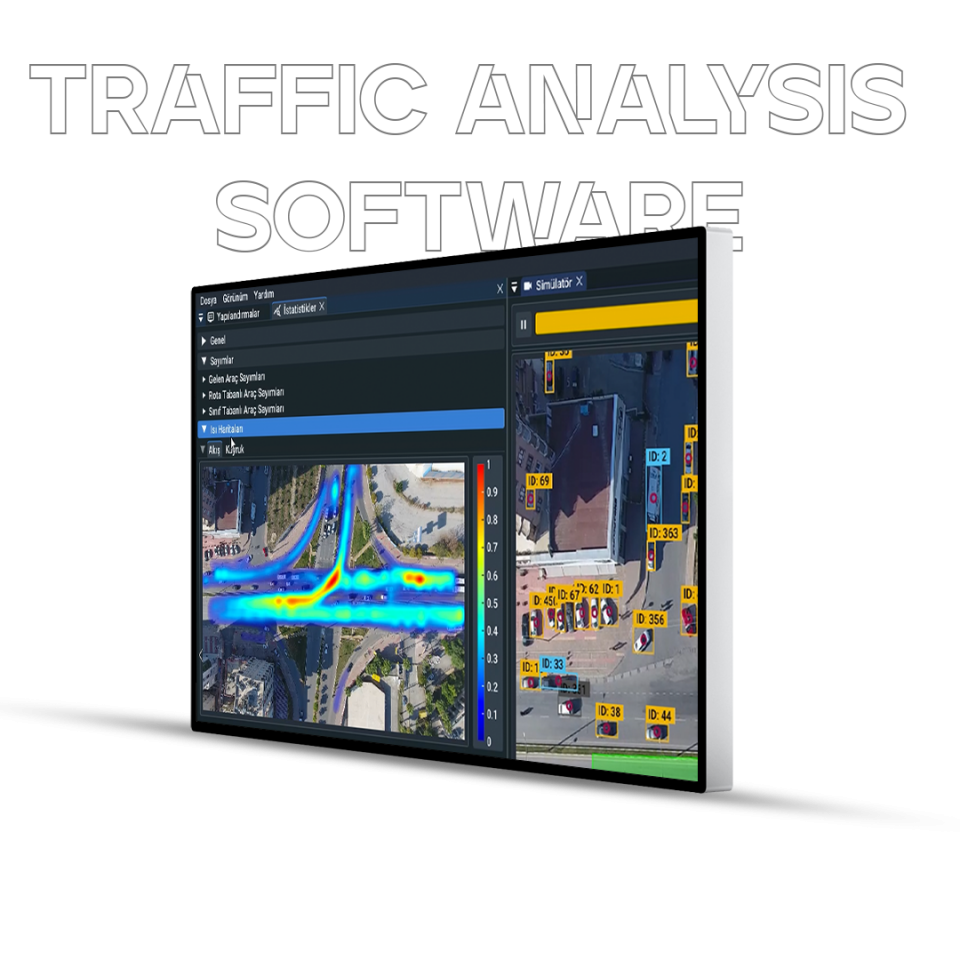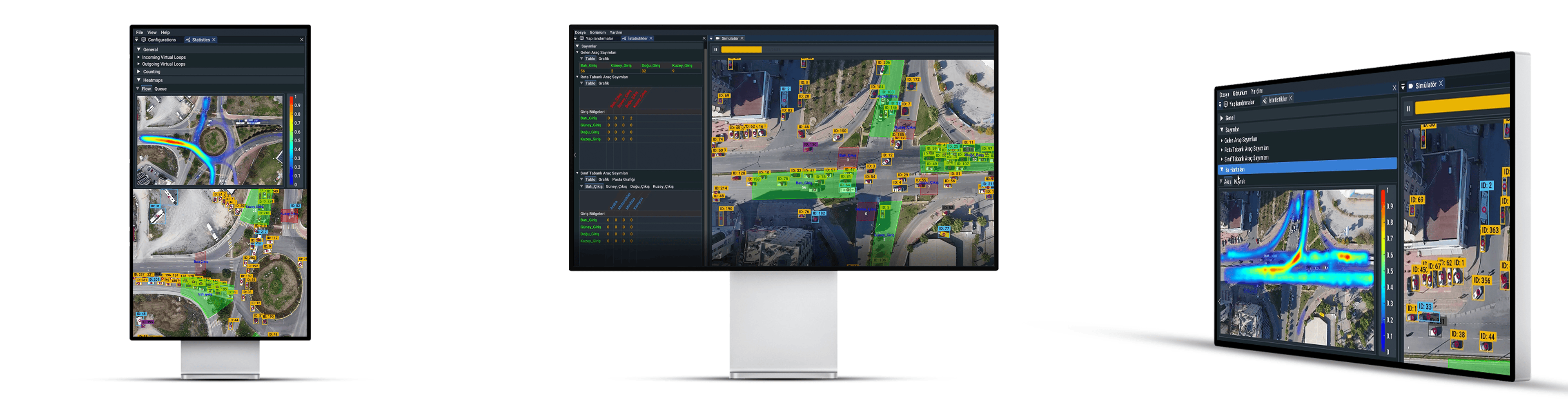
We observed that traffic control and management systems currently used in urban road networks are predominantly operated with fixed-time or limited adaptive signalization logic at intersections, while road segments and arterial corridors are largely managed based on point-based sensor data. We identified that these approaches fail to adequately reflect instantaneous and spatially varying traffic demand, resulting in extended waiting and travel times, irregular traffic flows, increased fuel and energy consumption, and associated negative environmental impacts. Therefore, we concluded that there is a need for a regular, objective, and holistic performance measurement approach that encompasses not only intersections but the entire traffic network at the scale of urban roads, arterials, and corridors.
Based on this need, as MOSAŞ, we developed the Traffic Analysis Software to evaluate the effectiveness of existing traffic management and signalization systems used across urban transportation infrastructure—including intersections, road segments, main arterials, and traffic corridors—through an independent, data-driven analysis platform, without directly intervening in the operational systems.
In our analysis studies, we processed high-resolution video data acquired via drones using advanced image processing and artificial intelligence–based object detection and tracking algorithms. This enabled us to continuously, simultaneously, and holistically monitor vehicle movements not only within intersection areas but also along roads and arterials. As a result of these analyses, we automatically, consistently, and comparably calculated critical traffic performance indicators for vehicles constituting the traffic flow, including:
-
Entry–exit movements and route preferences
-
Speed, acceleration, and stop-and-go profiles
-
Waiting, travel, and delay times
-
Queue lengths, queuing ratios, and traffic wave formations
-
Density, saturation, and capacity utilization levels
These metrics provide a robust, data-driven foundation for comprehensive traffic performance assessment across the urban road network.
Using the data we obtained, we developed various traffic demand levels, signalization strategies, lane usage configurations, and operational scenarios for intersections, road segments, and arterials. Through these scenarios, we quantitatively evaluated the performance of existing implementations and analyzed the potential impacts of alternative traffic management and signalization approaches on traffic flow, delays, capacity utilization, and emissions without requiring any intervention in the field. This approach enabled us to provide decision-makers with the ability to compare scenarios and identify the most appropriate solution without taking operational risks.
Compared to fixed-camera and conventional sensor-based systems, our drone-based analysis approach allowed us to achieve a significantly broader field of view encompassing not only intersections but also entire road segments and arterials. Through AI-powered automated analyses, we eliminated the need for manual counting and observation-based methods, delivering fast, repeatable, and results that are comparable across both time and space.

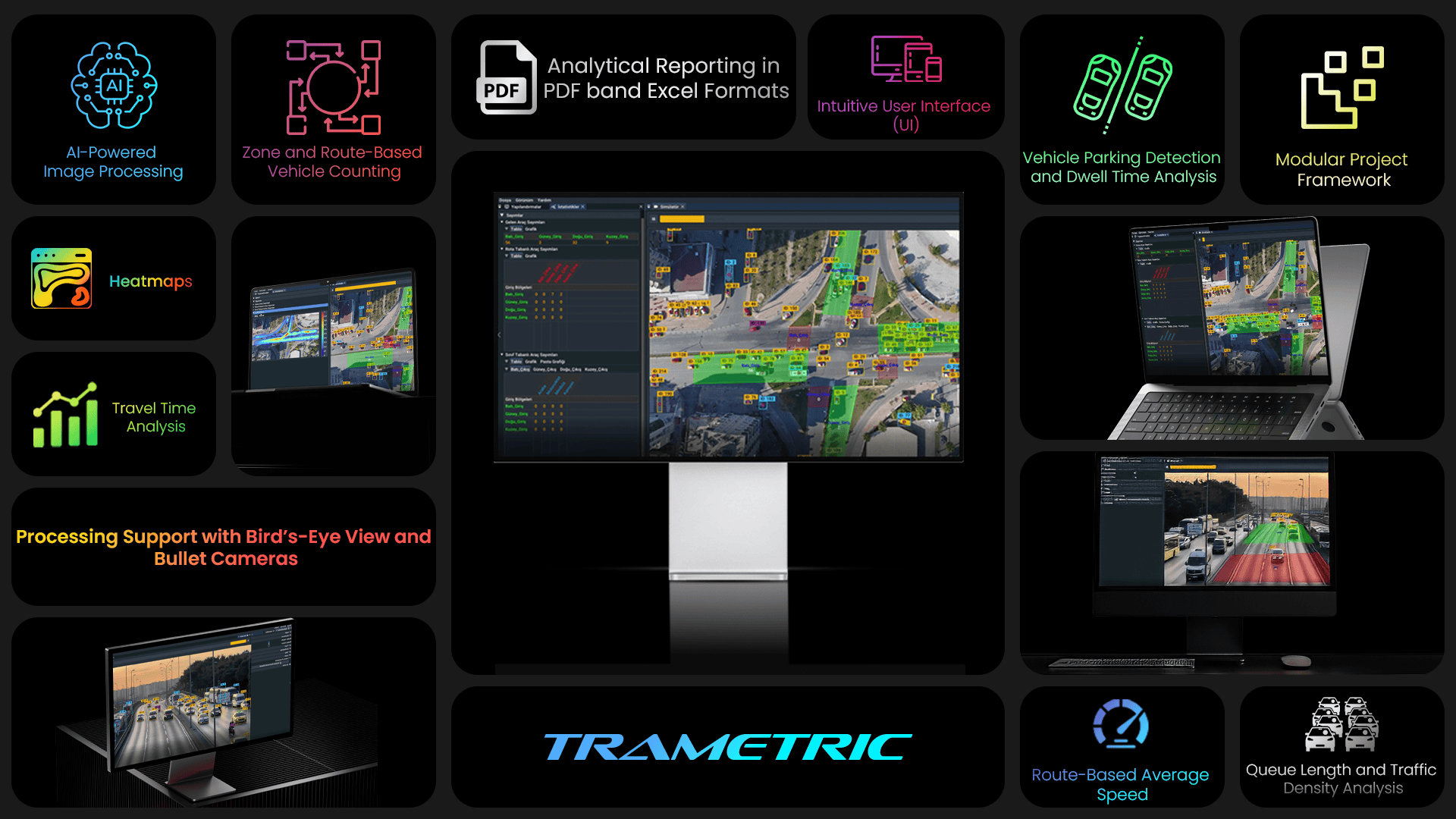
With TRAMETRIC:
- AI-powered image processing for vehicle detection, tracking, and classification
- Zone-based vehicle counting
- Route-based vehicle counting
- Queue length and congestion analysisTraffic flow heat maps
- Queue heat maps
- Route-based average speed and travel time analysis
- Area-based flow speed analysis
- Parking detection and duration analysis
- Detailed analytical reports with charts in PDF and Excel formats