
Scope and Methodology
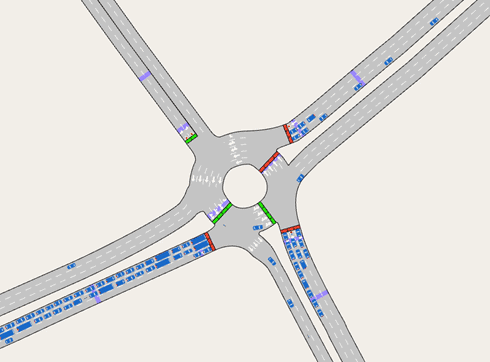
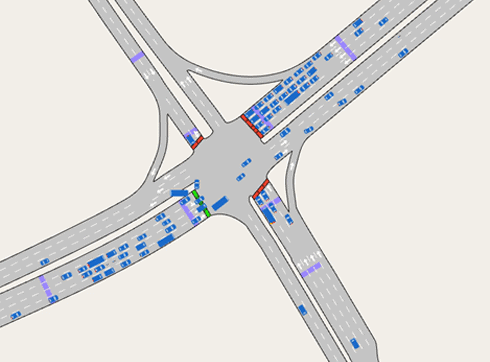
Transportation studies are carried out using advanced simulation software supported by real field data, including traffic volumes, speeds, delays, queue lengths, and similar parameters. This approach ensures that each proposed measure is numerically tested prior to implementation and validated through measurable, quantitative outputs.
Key Services Provided
-
Urban Traffic Circulation Analyses
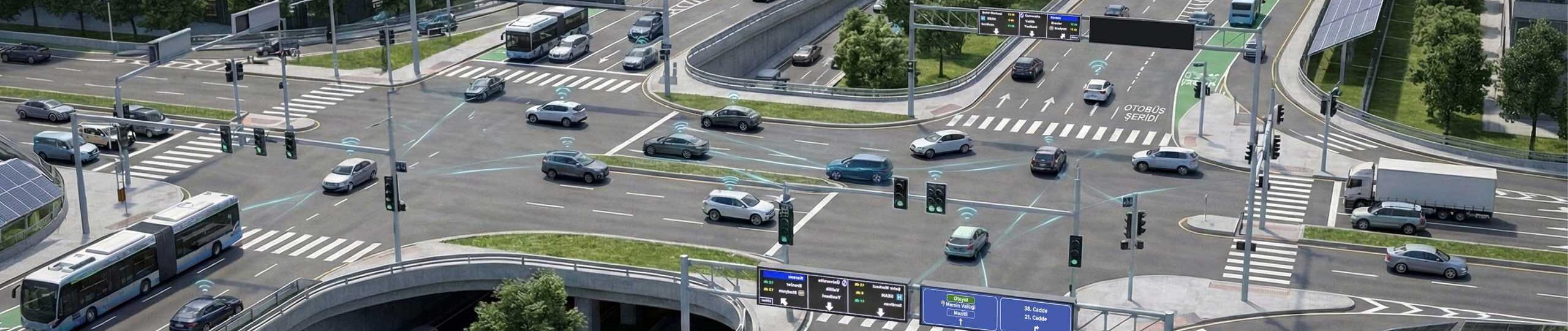
Traffic flows, directional distributions, and bottleneck locations within urban road networks are analyzed to develop intersection and roadway improvement alternatives aimed at enhancing overall circulation efficiency.
-
Intersection Design and Signalization Studies
Capacity analyses are conducted for both roundabouts and signalized intersections. Geometric and signal timing optimizations are proposed by considering delay, stop time, and average speed performance criteria.
-
Transportation and Traffic Simulation Studies
Existing conditions and proposed scenarios are compared using microscopic traffic simulation models. Delay rates, average speeds, numbers of stops, fuel consumption, and CO₂ emissions are quantitatively evaluated.
-
Highway and Roadway Feasibility Studies
Traffic demand forecasts, performance analyses, and economic and environmental impact assessments are carried out for new roadway projects, network connections, and capacity expansion initiatives.
-
Traffic Studies for Shopping Centers, Complexes, and Special Facilities
Entry and exit capacities, peak-hour analyses, and parking access scenarios are prepared for shopping malls, hospitals, residential developments, and mixed-use projects.
-
Parking Studies and Demand Analyses
Parking demand, turnover rates, and usage durations are analyzed to develop optimal capacity requirements and efficient operational models.
Value Delivered
-
Measurable reduction in traffic delays and stopping times
-
Significant improvement in average speeds and roadway capacity
-
Environmental benefits through reduced fuel consumption and CO₂ emissions
-
Data-driven and reliable engineering outputs to support investment decisions
-
Pre-implementation risk assessment through simulation-based testing
-